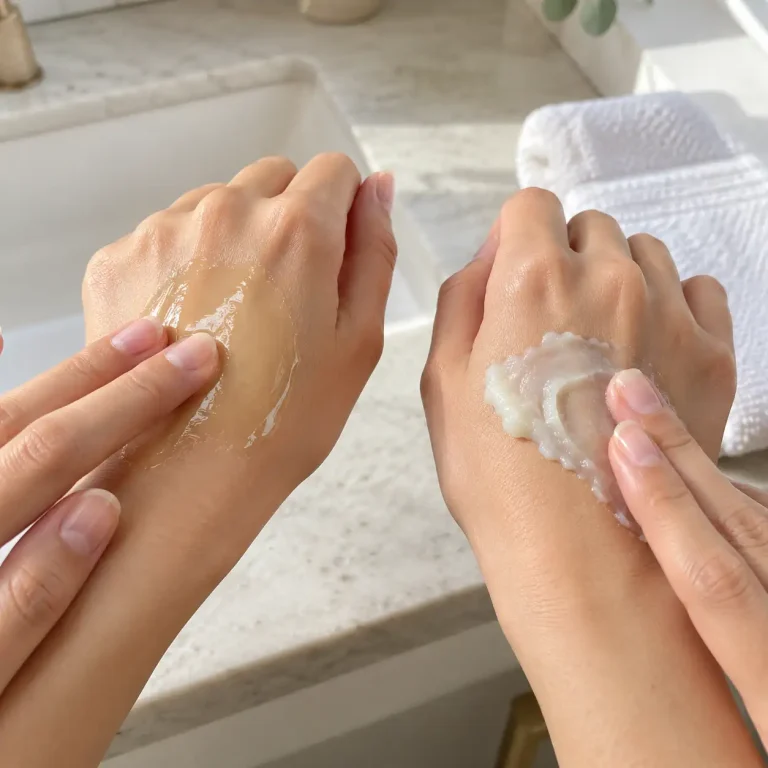
The cleansing Balm vs Cleansing Oil question sounds bigger than it is. Both are oil-based cleansers made to be used first at night, both dissolve sunscreen and makeup, and both are rinsed off with water. So why do people feel strongly about one over the other?
The difference is mostly sensory. One pours and spreads in seconds. The other starts solid and melts under your hands. One may rinse to a light, milky wash, while the other may need a warm cloth to finish the job. Those small differences shape how a routine feels, and a routine you enjoy is one you will actually repeat. Neither choice is wrong, and plenty of people switch between them. It is easy to test both at home.
Below, we compare the two on texture, rinsing and skin feel, then match each to your day and your skin.
Cleansing Balm vs Cleansing Oil: The Quick Answer
Choose a cleansing oil if you want a light texture, fast spreading and a quick rinse. Choose a cleansing balm if you prefer a slower, more controlled massage, a richer feel or something easy to travel with. Both remove sunscreen and makeup well when they are rinsed properly, and neither is better for every skin. The formula matters more than the format, so judge any product by how it rinses and how your skin feels an hour later.
Key Takeaways
- Both are oil-based first cleansers, and the main differences are texture, rinsing and skin feel.
- A cleansing oil usually spreads quickly and rinses lightly, while a balm usually melts slowly and gives you more control.
- Rinsing depends on the formula, so check that your skin feels clean and comfortable, not coated.
- Sensitive skin does best with gentle formulas, light pressure and a thorough rinse.
- A simple tissue test after rinsing shows whether a product has left a film behind.
- You do not need either one on a bare-faced day.
What Each One Actually Is
Cleansing Oil
A cleansing oil is a liquid blend of oils, usually in a bottle or pump. You apply it to dry skin with dry hands, massage it in, then add a little water. Many formulas include an emulsifier, an ingredient that helps oil mix with water, so the oil turns milky and rinses away. Some simpler oils do not behave this way, which is why it helps to read the directions on the label.
Cleansing Balm
A cleansing balm is a solid or semi-solid cleanser, usually in a tub or tin. It feels firm at first, then softens and melts into an oily layer as it warms against your hands and skin. You work it over your face the same way you would an oil, then add water and rinse. Many people also remove it with a warm, damp cloth, which can give a more thorough finish. Some brands call these melting or sherbet balms, though the names describe texture rather than performance. The exact texture differs from brand to brand.
What They Share
Underneath the texture, the two do the same job. Oil-based formulas dissolve oil-based substances such as sunscreen, sebum and makeup, which water alone does not lift well. That makes either one a sensible first step when you double cleanse, followed by a water-based cleanser. We cover when that second step is worth it in our guide to when to double cleanse, so this article stays on the choice between the two formats. The format changes the experience, not the purpose.
Texture: How Each One Feels on Your Skin
How a Cleansing Oil Feels
A cleansing oil is fluid. A pump or two spreads across the whole face in seconds, and your fingers glide without dragging. That slip is useful if your skin is easily irritated by friction, or if you wear a lot of makeup and want to move quickly. The trade-off is that it can run down your wrist or into your eyes if you use too much, so start with a small amount and add more only if you need it.
Cleansing Oils at PhiBeauty
A few cleansing oils from our range. Read each product page for directions and ingredients before you choose.


How a Cleansing Balm Feels
A cleansing balm is thicker and slower. You scoop a small amount, warm it between your palms for a few seconds, then press and massage it into skin. It stays where you put it, which gives you more control around the nose, brows and hairline. The trade-off is the extra step of warming it, and a tub needs a clean spatula or dry fingers to stay hygienic.
Which Texture Suits Your Hands
Neither texture is better in itself. It comes down to how you like to wash. If you prefer speed, an oil usually fits. If you like a longer massage, a balm usually does.
| Cleansing oil | Cleansing balm | |
|---|---|---|
| Starting texture | Liquid | Solid or semi-solid |
| Application | Pump or pour, spreads at once | Scoop, warm, then massage |
| Control | Less; it can run | More; it stays in place |
| Packaging | Bottle or pump | Tub or tin |

Texture of a cleansing oil compared with a cleansing balm
Rinsing: What Happens When Water Hits
Emulsifying: The Milky Stage
Rinsing is where the two formats differ most in practice, and where the formula matters most. After massaging, add a small splash of lukewarm water and keep massaging. A well-made oil or balm turns milky as it emulsifies, meaning the oil mixes with the water and lifts away. If that milky stage does not happen, rinsing may take longer. Check the label directions before you judge a product, because some are meant to be used with a cloth and others with water only.
What Rinses Clean and What Leaves a Film
No format guarantees a perfectly clean rinse. Balms are often thicker, so they can take a little longer, and a warm cloth helps. Oils are usually lighter, but a simple oil without an emulsifier can leave a slick behind. Either can leave a film if you rush. Rinse for longer than feels necessary, using lukewarm water, and keep your hands moving over the hairline and jaw, where residue tends to hide. If you double cleanse, your second cleanser will pick up what remains.
A Simple Rinse Test
Here is an easy way to judge any product at home. After rinsing, pat your face dry and press a clean tissue lightly against your forehead and cheeks. If it picks up a greasy mark, or your skin feels slick, the rinse was incomplete. If your skin feels clean but comfortable, it worked. A product that leaves a film every time despite good technique may not suit you, and that is a fair reason to try another.
Skin Feel: Right After and an Hour Later
Right After Rinsing
Immediately after rinsing, skin should feel clean and comfortable, not squeaky or stripped. Many people find that oils leave a soft, light feel, while balms can leave a slightly richer one. Both are normal when the rinse has been thorough. A squeaky, tight feeling is a sign that something is too much, whether the product, the water temperature or the scrubbing, and it is a reason to go gentler. If your skin feels slick instead, that usually means product is still on it. Pat, do not rub, when drying your face.
An Hour Later
The better test comes later. Check your skin about an hour after cleansing, before moisturiser if you can. A coated or greasy feel suggests leftover product. Tightness or flaking suggests the routine is too harsh, either from the product or from over-cleansing. If your skin feels calm and even, you have found a format that works for you. Keep a note for a week, because one night rarely tells you much. The next morning is a useful check too: skin that wakes up comfortable is a good sign.
Around the Eyes
Both formats can sting if they reach your eyes, because oil mixed with water spreads easily. Close your eyes while you massage and rinse, and keep products away from the lash line unless the label says it is made for the area. Using less product near the eyes lowers the chance of stinging. If your eyes sting or your skin looks red, rinse with water and stop using the product. If irritation continues, speak with your GP or pharmacist.
Which One Suits Your Day
Your day matters as much as your skin. Here is how each format fits the situations that come up most.
Water-Resistant Sunscreen
Water-resistant sunscreen is built to stay on, so it benefits from an oil-based first step. Either format works. What matters is the rinse: apply to dry skin, massage for a full minute, and rinse until the film is gone. If you reapply sunscreen through the day, give it a little extra time.
Long-Wear Makeup
Waterproof mascara and full-coverage foundation often need more time. A balm’s slower massage can suit these days, and an oil can be quicker for people who find balms fiddly. Either way, give the product time to dissolve the makeup and avoid rubbing hard.
Light Makeup or a Bare Face
On a bare-faced day, or with a light tint only, you may not need an oil-based step at all. One gentle cleanse is often enough, and our guide to when to double cleanse explains how to decide.
Travel, Gym and Quick Nights
A balm in a small tin is easy to pack and will not leak. An oil in a bottle is fast when you are tired. Both can work on the road if the packaging is secure. Pick whichever you will use consistently.
| Type of day | Cleansing oil | Cleansing balm |
|---|---|---|
| Water-resistant sunscreen | Suitable | Suitable |
| Full or waterproof makeup | Suitable | Suitable, with more massage time |
| Light makeup or bare face | Usually not needed | Usually not needed |
| Travel | Check the packaging | Often easy to pack |
Which One Suits Your Skin
Skin type is harder to pin down than labels suggest. A 2023 study in Heliyon, which built an image-based skin type classification model, wrote: “Identifying skin types can be challenging, especially when they vary from oily to dry in different areas, with skin specialist providing more accurate results.” That is why this section focuses on how your skin feels an hour after cleansing, not on the label you think you have. If you are unsure of your skin type, a skin specialist can give you a more accurate answer.
Oily or Breakout-Prone Skin
Oily skin does not automatically rule out an oil-based cleanser. What matters is a complete rinse, because leftover product can feel heavy and may add to congestion for some people. Choose a lighter texture, rinse well and follow with a gentle water-based cleanser. That second step can help on days with heavy sunscreen. If breakouts continue, speak with your GP or pharmacist.
Dry Skin
Dry skin often enjoys a richer, cushioned feel, which is why many people reach for a balm. Still, the deciding factor is how your skin feels an hour later. If it feels comfortable and not tight, the product suits you. If it feels tight, try a gentler or less frequent routine. Pat dry and moisturise while skin is slightly damp.
Sensitive Skin
Sensitive skin reacts to friction, fragrance and incomplete rinsing more than to the format itself. Look for gentle formulas, use light pressure and test a new product on a small area first. If you have eczema or rosacea, or use prescription skin medication, ask your GP or pharmacist about your routine before adding any new product. Introduce one new product at a time so you can spot what bothers your skin.
Combination Skin
If you are oily in some areas and dry in others, either format can work. Use less product on the drier areas and spend a little longer rinsing the oilier ones. Different areas can need different handling. Judge by how your whole face feels after an hour.
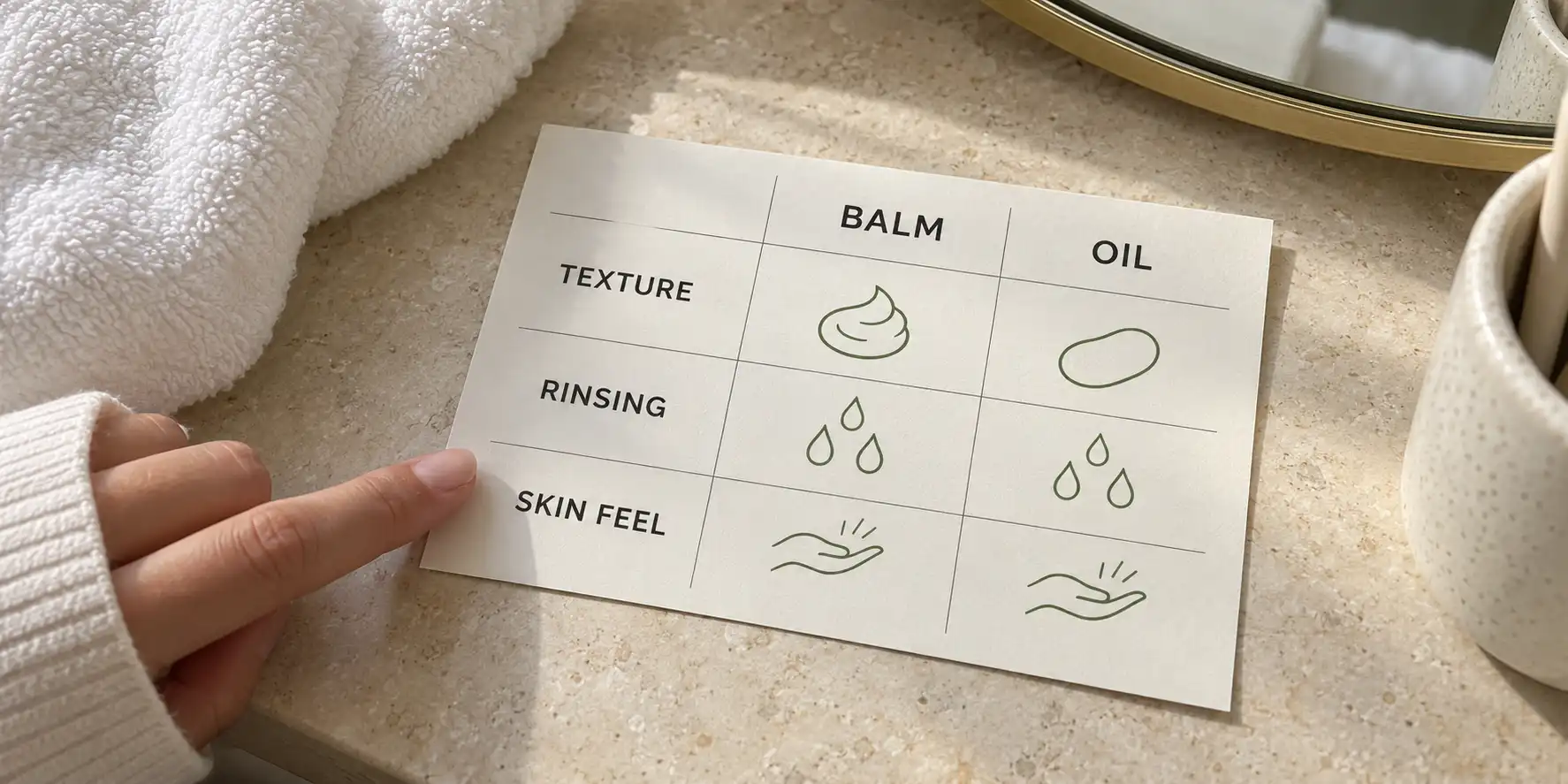
Cleansing balm vs oil compared on texture, rinsing and skin feel
How to Use Each One Properly
Technique changes the result more than the format does.
Cleansing oil
- Apply one or two pumps to dry skin with dry hands, which helps the product spread.
- Massage gently for about a minute, focusing on areas with sunscreen or makeup.
- Add a little lukewarm water and keep massaging until it turns milky.
- Rinse thoroughly, then follow with a gentle water-based cleanser if your day calls for it.
Close your eyes while you massage and rinse.
Cleansing balm
- Scoop a small amount with a clean spatula or dry fingers.
- Warm it between your palms until it softens and melts.
- Massage onto dry skin for about a minute, then add lukewarm water until it turns milky.
- Rinse, or wipe with a warm damp cloth, then follow with a second cleanser if needed.
Wash your hands first, so you start with a clean surface. Both routines take only a few minutes, so choose by preference, not effort.
Common Mistakes and Quick Fixes
Most problems with either format come down to a handful of habits.
| Mistake | What happens | Quick fix |
|---|---|---|
| Applying to wet skin | Product does not spread or dissolve well | Apply to dry skin |
| Rinsing too briefly | A film stays on skin | Rinse longer or use a warm cloth |
| Rubbing hard | Skin becomes irritated | Use light pressure |
| Using hot water | Skin feels tight and dry | Use lukewarm water |
| Dipping wet fingers in a tub | Product becomes contaminated | Use a clean spatula |
| Skipping the second step on heavy days | Residue remains | Follow with a gentle cleanser |
If you are unsure which habit is the problem, start with the rinse. Spend longer on it, use lukewarm water and check how your skin feels after an hour. In most cases, that one change makes the biggest difference. If your skin still feels uncomfortable, simplify to one gentle cleanse and bring the oil-based step back only on heavy sunscreen or makeup nights. Change one habit at a time, so you can tell what made the difference.
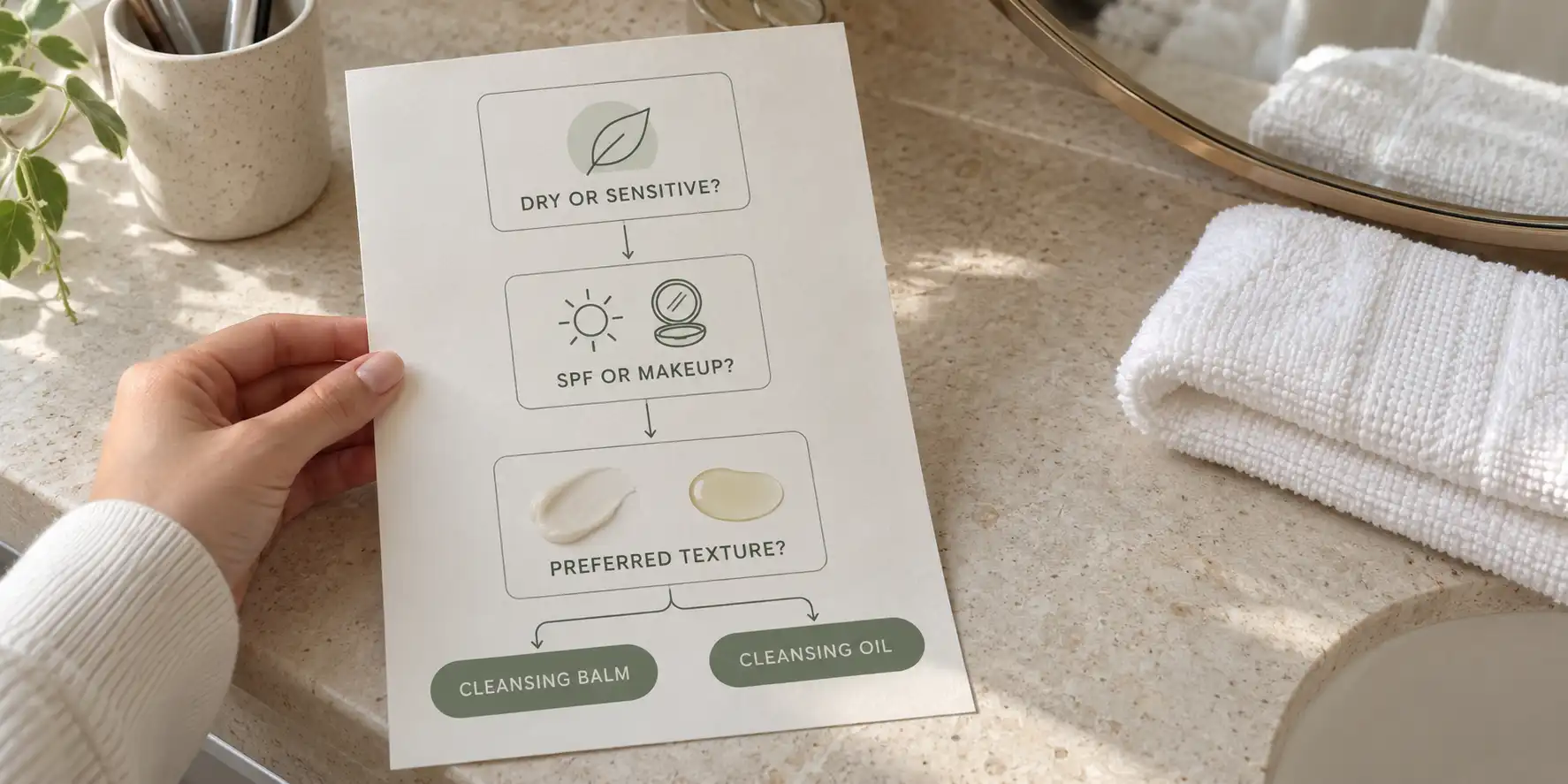
How to choose between a cleansing balm and a cleansing oil
How to Choose a Formula
Choose the texture you will enjoy using, then check three things on the label. First, the directions: do they say to add water or to use a cloth? Follow them. Second, the packaging: a pump, or a tin used with a spatula, keeps the product cleaner than an open tub. Third, the fragrance: if your skin is easily irritated, a fragrance-free formula is a safer starting point.
Buy a small size first if you can, and test it for a week before deciding. Ask yourself how much time you want to spend, because a balm adds a warming step and an oil does not. Price can guide you too, but a higher price does not guarantee a better rinse or a better fit for your skin.
If you are leaning towards a cleansing oil, our range includes Medik8 Lipid-Balance Cleansing Oil 140ml, Filorga Skin-Prep Perfecting Cleansing Oil 150ml and Fillmed Cleansing Oil 200ml. Read each product page for directions and ingredients before you choose, and compare more options in our cleanser range.
Conclusion: Choose by How It Rinses and Feels
Cleansing balm vs oil comes down to how you like to wash, not which one is stronger. Choose an oil for speed and a light feel, or a balm for a slower, richer massage. Either way, rinse thoroughly, check how your skin feels an hour later, and follow with a gentle second cleanser when your day calls for it. If your skin feels tight, stings or looks red, simplify your routine. The right one is the one your skin agrees with. When you are ready to compare options, browse our cleanser range.
FAQ
1. Can I use a cleansing balm and a cleansing oil together?
You can, but there is rarely a reason to. Both do the same job, so using both in one routine adds washing without adding much. Pick one as your first step and follow it with a gentle water-based cleanser if your day calls for it.
2. Do I need a second cleanser after a balm?
It depends on your day. After water-resistant sunscreen or long-wear makeup, a second cleanse helps remove any film. On lighter days, one thorough rinse may be enough. Our guide to double cleansing explains how to decide, including the signs you are doing too much.
3. Will a cleansing oil make my skin oilier?
Not by itself. Oil can feel greasy if it is not rinsed away, but a thorough rinse removes it. If your skin feels slick an hour later, rinse for longer or add a gentle water-based cleanser. Washing more does not reduce oiliness, so avoid overdoing it.
4. Is a cleansing balm okay for sensitive skin?
It can be, if the formula is gentle and you use light pressure. Friction, fragrance and incomplete rinsing tend to cause more trouble than the format. Test a small area first, and if you notice stinging or redness, stop using it and speak with your GP or pharmacist.
5. Can cleansing oil cause breakouts?
A cleanser that is not rinsed properly can leave a film, and for some people that film feels heavy. Neither format promises a change in breakouts. If they continue, speak with your GP or pharmacist. Our acne guide covers the wider picture.
Sources
- Saiwaeo S, Arwatchananukul S, Mungmai L, Preedalikit W, Aunsri N. Human skin type classification using image processing and deep learning approaches. Heliyon. 2023;9(11):e21176.